
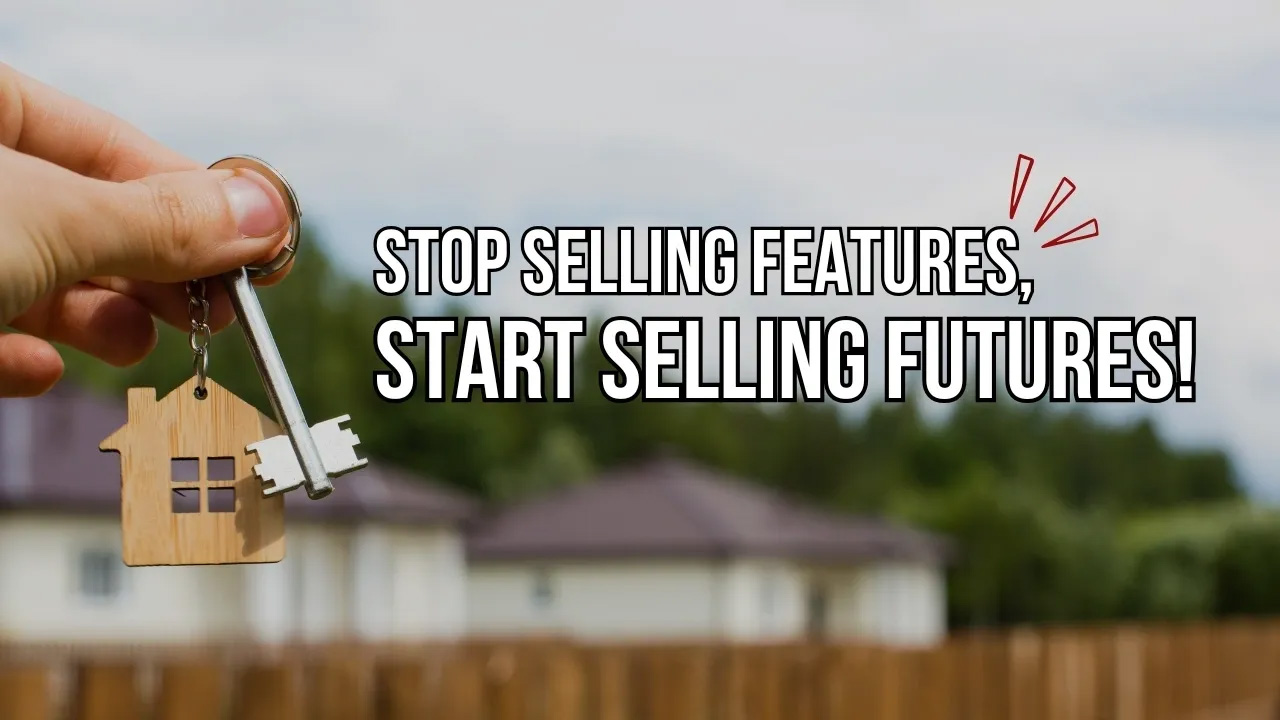
Upgrade Your Listing Marketing: Stop Selling Features, Start Selling Futures!
Most real estate agents default to marketing homes by rattling off stats: three bedrooms, two baths, 2,364 square feet.
The problem? Features don’t sell homes. Futures do.
And as my former coach and mentor Jon Cheplak often says: People want to buy, but they don’t want to feel sold.
That insight is critical. Buyers aren’t just responding to data. They’re motivated by life changes, emotions, and identity shifts. Your job as an agent isn’t to push features, it’s to help people connect their motivation to the story of a home, in a way that makes them feel confident about buying.
Why Features Alone Fall Flat
Square footage matters. Condition matters. Location matters. But none of those numbers inspire action on their own.
When a buyer walks through a property, they’re not replaying the bullet points from the MLS. They’re imagining how they might use the space.
- A kitchen island where people can gather and share meals.
- A backyard that works for entertaining or relaxing.
- A flexible room that adapts to their needs — office, guest space, or studio.
Notice the difference: you’re not telling people who should live there. You’re showing how the property’s features can support a variety of futures. This approach is powerful, and it stays compliant with the Fair Housing Act and NAR Code of Ethics.
The Psychology of Selling Futures
Emotions create comfort in buying, and psychology drives the decision-making process. Data supports the purchase, but story anchors it.
This is where my Motivated Movers framework comes into play. These 14 D’s — like Divorce, Death, Diamonds, Diapers, Downsizing, Deployment, and more — represent major life events that shift people from wanting to move to needing to move.
They are not just market triggers. They are stories in motion.
Your role as a marketer is to align the home’s story with those motivations. Someone downsizing may see value in the convenience of a smaller footprint. Someone facing a new stage of life may prioritize adaptable spaces. By shaping the narrative, you connect the home’s features to the buyer’s deeper “why.”
Why Storytelling Works Better Than Data
People will forget raw numbers. But they remember stories.
Think about a scene in a movie, it sticks with you because you can visualize it. That’s exactly what you want in your property marketing.
Instead of “large backyard,” say: “Spacious yard designed for gatherings or quiet evenings.” Instead of “updated kitchen,” say: “Modern kitchen with upgraded counters and fixtures, ready for your next celebration or everyday routine.”
These phrases are factual, accurate, and flexible but they also help buyers visualize themselves in the space. Stories sell visions, and visions drive decisions.
From Agent to Marketer
Too many agents stop at the basics: yard signs, MLS entries, and the occasional open house. Those are tools, not a strategy.
If you want to stand out, you must embrace your role as a marketer. That means:
- Studying marketing principles, not just memorizing scripts.
- Learning from brands and storytellers, not just sales trainers.
- Investing in creative strategies as much as you invest in negotiation skills and client experience.
Scripts matter. Negotiations matter. But without compelling marketing, fewer clients will ever get far enough to see those skills in action.
The Future Belongs to Storytellers
The agents who thrive in the next chapter won’t just be transaction managers. They’ll be vision creators. They’ll market futures, not just features. Because people don’t just buy homes. They buy what those homes mean for their lives.
So, your job is not to recite a feature list. Your job is to tell the story of a future that buyers can step into.
Ready to Upgrade Your Copywriting?
If you want to master this skill, I’ve created a free resource just for you:
Agent Copywriting Cheat Sheet: How to Sell Futures Instead of Features
This guide gives you practical, plug-and-play examples of how to transform generic, feature-driven descriptions into compelling, future-driven copy that gets remembered — and gets results.
Download it today and start marketing like the modern agent your clients deserve.